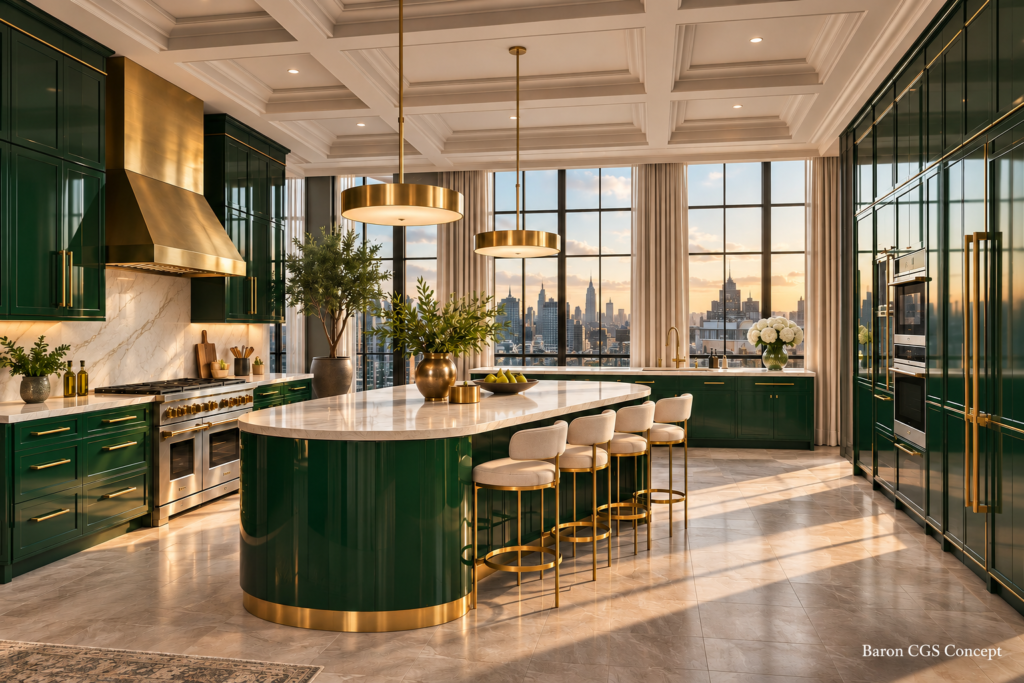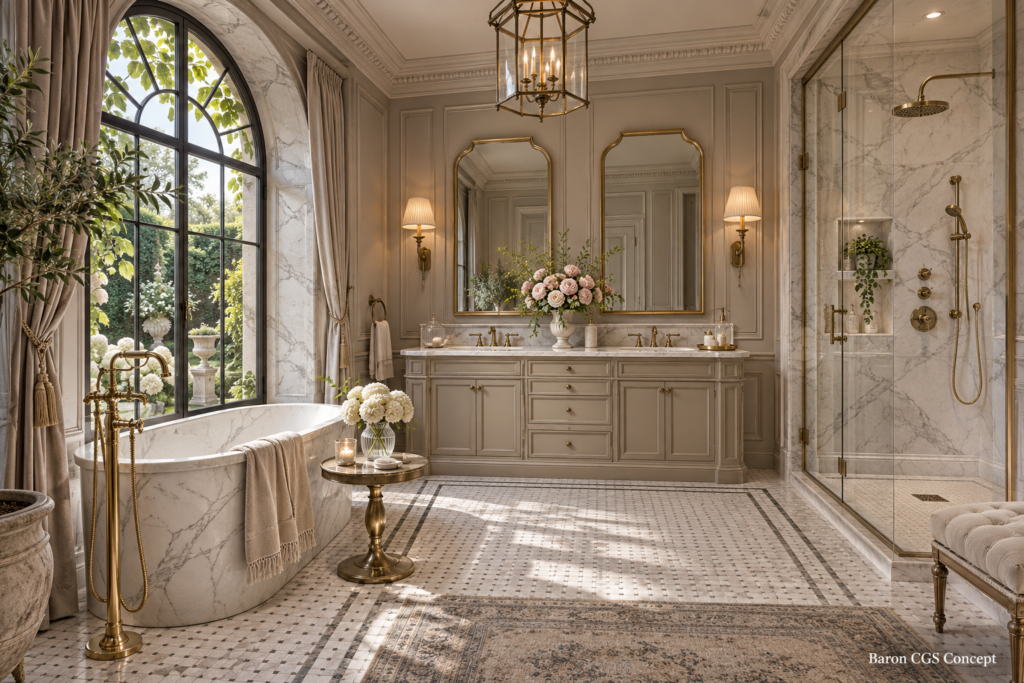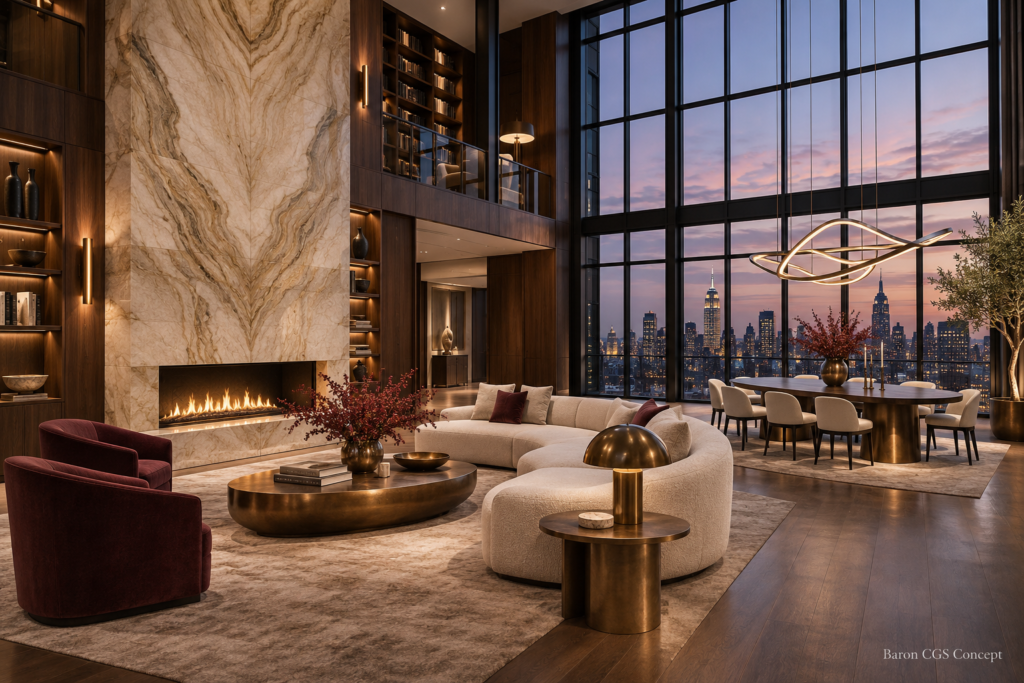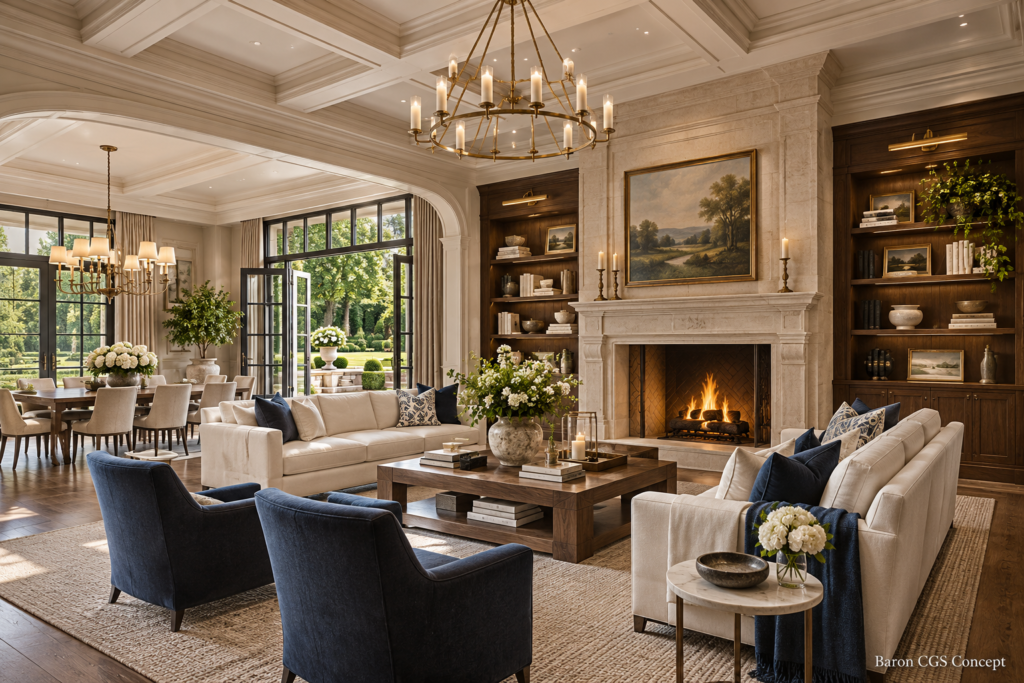
Lighting changes how a room is experienced. It can bring depth to a textured wall, emphasize a carefully detailed ceiling, make a kitchen easier to work in and create a welcoming atmosphere for evening entertaining. In a high-end remodel, lighting deserves a place in the earliest design conversations.
Plan around the activities in each space
Begin with the room's intended use rather than a grid of fixtures. Identify the tasks that require focused light, the surfaces worth highlighting and the places where a softer mood is desirable. A kitchen may need clear illumination at preparation areas and a more relaxed setting around an island. A living room may combine conversation, reading and display.
Develop the furniture and lighting plans together. Pendants should relate to the table or island they serve. Reading lights should suit the seating position. Wall lights need to work with mirrors, artwork, doors and millwork rather than occupy whatever space remains.
Build depth through layers
Ambient lighting provides the overall foundation. Task lighting supports work, reading and grooming. Accent lighting brings attention to architectural details, art and selected materials. The balance between these layers is more important than simply increasing the number of fixtures.
Concealed lighting can emphasize joinery and create a subtle evening setting, provided the light source, diffusion and access for servicing are carefully detailed. Samples or mockups can help evaluate how light interacts with polished stone, reflective tile and textured surfaces.
Coordinate decorative fixtures with the architecture
A chandelier or pendant can become a focal point, but its proportions should be considered in the complete room. Check the fixture's dimensions, suspension arrangement, ceiling support and relationship to sightlines. A visually striking fitting should still feel comfortable and purposeful in the space.
Metal finishes can relate to hardware and furniture without requiring every element to match. A coherent palette and repeated forms often produce a more composed result than choosing each fixture independently.
Make controls part of the experience
Consider which lights should operate together and which deserve separate control. Dimming can help adapt a room from daytime activity to evening use, but lamps, drivers and controls need compatible specifications. If a smart system is planned, discuss usability, manual control and long-term support with the installer.
Coordinate electrical work, wet-location suitability and installation requirements with qualified professionals. Product specifications and the applicable project requirements should guide final selection.
Finish with portable lighting
Table and floor lamps add flexibility and a more personal scale. Their placement should be planned alongside seating, surfaces and outlets, keeping cords out of walking routes. Review the Baron CGS Store for available furnishings and lighting, and check individual product details against your design plan before ordering.
Explore the lighting and material ideas within Baron CGS Concepts, then start a conversation about your project.
Bring your project into focus
Share your goals, scope and preferred design direction with Baron CGS.
Discuss Your ProjectDesign imagery: Baron CGS illustrative design concepts, customizable to suit your space.